MU Immortal
- 4.4
- Rating
- 500.00K
- Installs
- Free
- Price

 Analysis by App-foxy
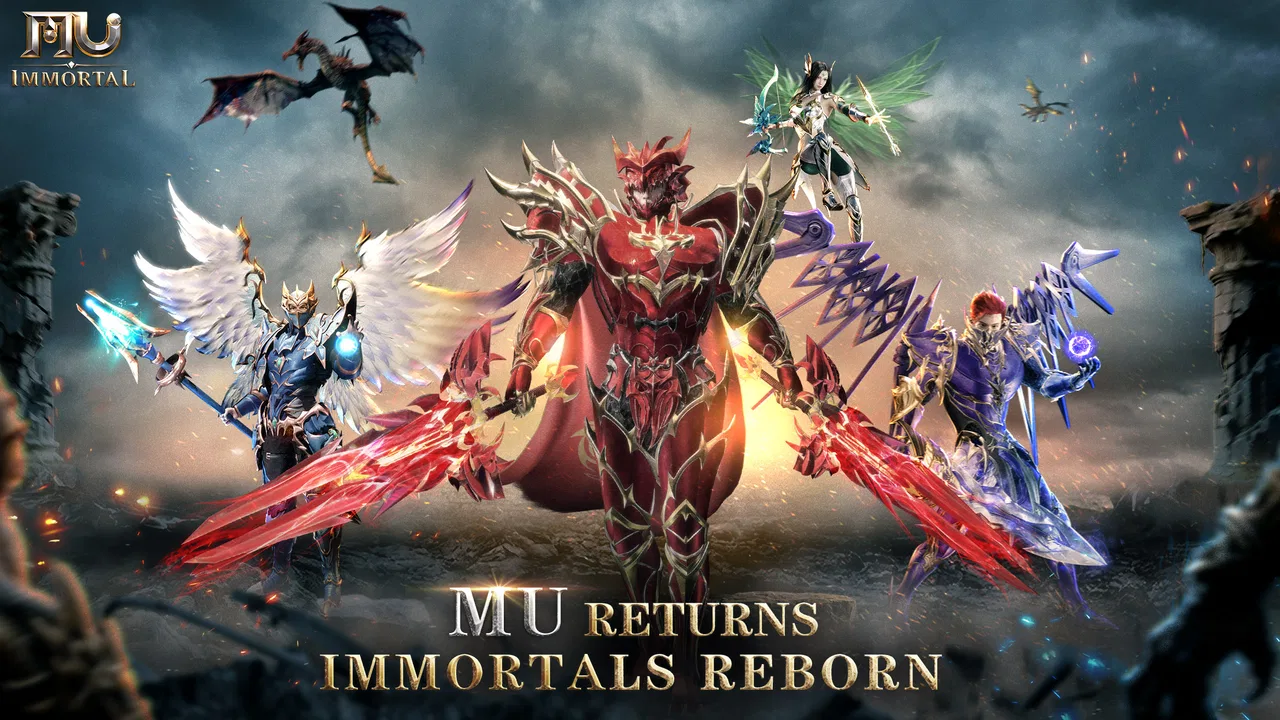
MU Immortal is the kind of role-playing game I can open for a short session and still feel that I have made progress. It carries the official MU license from WEBZEN, while Kingnet Technology Limited handles development, and the result is a mobile fantasy adventure built around steady character growth, combat, and the familiar appeal of improving a hero over time. I played it with the expectation that it would be easy to start but demanding enough to reward attention, and that is broadly how it feels.
The game is free to download, although optional purchases range from $0.49 to $99.99 per item. That difference matters: the opening experience is accessible, but anyone who stays for the long term will need to decide how much convenience and acceleration are worth spending on. With a Teen content rating, it is aimed at older players rather than very young children. It supports Android devices running version 6.0 or later, and the current version is 1.1.70.
How the everyday MU Immortal routine actually feels
My normal session starts by checking what is immediately available rather than rushing into the most demanding activity. I look at the character screen, collect anything already earned, inspect equipment, and then choose a goal for that session. Sometimes that goal is simply improving damage; on other days, I focus on staying alive or clearing a task that has been waiting in the background.
You May Also Like

 Blood Strike: 2.5 Anniversary
Blood Strike’s Loadouts Turn Every Drop Into a Tactical Gamble
A close look at Blood Strike’s custom loadouts: how fast access to signature weapons reshapes its battle royale rhythm, rewards preparation, and narrows the gap between fights.

 Pandora - Music & Podcasts
Pandora’s Music Is Easy to Start, but Harder to Recover
Pandora’s strength is its low-effort path from a seed to a station. Its weak spot is how much confidence it asks you to place in connection, setup, and quiet recovery.

 8 Ball Pool
 Is Built on Rivalries, Rematches, and Routine
A close look at the rivalries, rematches, shared routines, and unanswered safety questions that turn a quick pool match into a persistent mobile community.

 Samsung Music
’s Quiet Strength Is Playing What You Already Own
Its reach comes less from spectacle than from dependable access to a personal library. That simplicity is both the app’s strongest retention engine and its ceiling.

 AccuWeather: Weather Radar
AccuWeather Review: A Quick, Clear Forecast for Everyday Decisions
For everyday plans, the best forecast is the one you can understand quickly. AccuWeather makes rain timing, radar, and local conditions easy to act on, with a few trade-offs.

 Hill Climb Racing
Why Hill Climb Racing Still Turns Crashes Into One More Run
A tiny car, a bumpy hill and one more upgrade: Hill Climb Racing keeps resurfacing because its simple chaos makes every near-miss feel personal.
More From Our News Desk
View All News


That small habit makes the game feel less scattered. Role-playing games can easily turn into a noisy list of icons, rewards, and unfinished objectives. Here, I found it more enjoyable when I treated each login as a short checklist: claim useful rewards, strengthen one part of the build, complete the most valuable available activity, and stop before the routine becomes tiring.
A realistic everyday use case is a commute or lunch break. I can play for a few minutes, make a meaningful upgrade, and leave without needing to reserve an entire evening. A longer session is better when I want to compare equipment or push through more content, but the basic loop works well in short bursts. That makes it more convenient than a slower, menu-heavy role-playing game that only feels worthwhile after a long uninterrupted session.
The combat is easy to approach, which is helpful when I am learning the game, but that simplicity also means the first battles do not provide much strategic depth. The interesting decisions arrive through preparation: which equipment to keep, which improvement deserves resources, and whether I should chase immediate power or build toward a more durable character. I would not choose it for highly technical action combat. I would choose it for the satisfying rhythm of fighting, upgrading, and returning stronger.
Choosing a goal instead of tapping everything
One of my most useful habits is to avoid treating every available button as equally important. If I open every menu in sequence, the session becomes a reward-collection exercise. Instead, I decide whether I am playing for progression, equipment, or simple relaxation. That choice helps me ignore distractions and makes the game’s many activities feel more manageable.
For progression-focused sessions, I prioritize the task that moves the character forward and only stop to inspect rewards that could change my next decision. For equipment-focused sessions, I compare potential upgrades before spending anything. If I am short on time, I avoid opening every optional screen and complete the clearest immediate objective. This is not a hidden trick; it is a practical way to keep a busy mobile RPG from taking over the entire session.
I also recommend checking the character after a noticeable upgrade rather than waiting until the end of a long play period. A new item or improvement can change what is worth attempting next. When I delay that check, I sometimes continue repeating an easier activity even though the character is ready for a tougher challenge.
Settings and controls worth checking early
The first settings I inspect in any mobile role-playing game are audio, notifications, display behavior, and anything that affects how quickly I can move through routine actions. I do not assume that the default setup is ideal for every phone or every playing environment. MU Immortal is much easier to live with when I adjust it around the way I actually play, especially if I am using it in short sessions.
At home, I prefer a presentation that lets the combat and character effects remain clear. In public, I am more interested in reducing distractions and keeping the interface readable. If the phone becomes warm or the battery drops faster than I expect, I treat that as a reason to shorten the session or lower demanding visual options where available, rather than forcing a long run.
Sound deserves more attention than it usually gets. I like having enough audio to understand that the game is active, but I do not need loud effects while playing near other people. A quieter setup also makes it easier to use the game alongside a podcast or music. That may sound minor, yet it affects whether I return to a game during ordinary daily routines.
Notifications should serve a purpose rather than constantly pulling me back. I prefer reminders that help me remember a useful activity, while unnecessary alerts can make the game feel like an obligation. The best setup is the one that lets me choose when to play instead of allowing the game to choose for me.
Before spending any premium currency or money, I also check the purchase screen carefully and ask what problem the item solves. The wide price range, from $0.49 to $99.99 per item, makes impulse buying particularly easy to regret. My rule is simple: I only consider a purchase after I understand whether it saves time, improves convenience, or changes the way I want to play. If I cannot explain the benefit clearly, I keep playing without it.
Faster patterns for repeatable progress
The fastest improvement in my sessions comes from repeating a sensible order of actions. I collect available rewards, inspect the character, choose one upgrade target, and then select content that matches that target. This prevents resources from being scattered across several small improvements that do not noticeably change the character.
For example, if my character is surviving comfortably but taking too long to finish fights, I concentrate on offensive improvements rather than spending equally on every available category. If I am failing because incoming damage is too high, I stop chasing speed and improve durability first. The important point is to respond to the actual reason for failure instead of automatically selecting the most expensive-looking upgrade.
I found it helpful to compare equipment by asking three questions: does it improve the problem I currently have, does it fit my preferred style, and will replacing it soon waste valuable resources? A slightly weaker item can still be the better choice if it supports the next stage of progression without forcing unnecessary spending. This is especially useful for players who enjoy planning rather than constantly chasing every new reward.
Another efficient pattern is to use short sessions for maintenance and longer sessions for decisions. In a short session, I claim rewards, make a quick upgrade, and complete a straightforward objective. In a longer session, I examine the character more carefully and decide whether my current approach still works. Separating those two kinds of play stops routine tasks from crowding out the parts that require thought.
I also avoid changing several things at once. If I replace equipment, alter my approach, and spend resources across multiple areas simultaneously, I cannot tell what actually helped. Making one meaningful change at a time gives me a clearer sense of the character’s strengths and weaknesses. It is a simple discipline, but it makes progression feel less random.
Where the game rewards attention
MU Immortal is more enjoyable when I remember that power is not the only measure of progress. A stronger character can still feel inefficient if the equipment does not suit the immediate challenge or if resources have been spent without a plan. I pay attention to the relationship between the character screen and the content I am attempting, rather than assuming that a higher number automatically solves every problem.
This also changes how I view failure. When a fight goes badly, I do not immediately conclude that I need to pay for progress. I first check whether I selected an unsuitable target, neglected a useful improvement, or continued with an outdated piece of equipment. Sometimes the answer is simply that I tried to advance too quickly. That approach keeps the free-to-play path more satisfying and helps separate genuine difficulty from poor preparation.
Players who enjoy optimizing will find room for this kind of routine. Players who prefer a completely hands-off experience may find the repeated checks less appealing. Although the game is approachable, long-term progress still benefits from paying attention to what is being upgraded and why.
Advanced limits and the free-to-play decision
The main limitation is that the game’s long-term appeal depends heavily on whether I enjoy repetition. The basic progression loop is pleasant, but it is still a progression loop: fight, collect, improve, and attempt something more demanding. If I need every session to introduce a completely new mechanic, the routine may begin to feel familiar sooner than I would like.
The other important limit is the presence of in-app purchases. The game can be started for free, which is a real advantage for anyone who wants to test the combat and progression before committing. However, the existence of optional items priced as high as $99.99 means I would not recommend entering the game without a personal spending boundary. A free download does not automatically mean a pressure-free long-term experience.
My advice is to play long enough to decide whether the core loop itself is enjoyable. If the battles, upgrades, and daily rhythm are fun without spending, purchases can remain optional conveniences. If the game only becomes appealing when progress is accelerated, I would stop rather than pay to solve a problem I did not enjoy in the first place.
This is also where it differs from other mobile role-playing choices. A turn-based RPG is usually better for players who want to think through every move. A character-collection game may be a better fit for someone who enjoys building a wide roster and comparing team combinations. A story-first adventure can offer more narrative focus. MU Immortal sits closer to the classic power-growth fantasy: the pleasure comes from making one character more capable and seeing that improvement carry into the next challenge.
That focus is both its identity and its boundary. I like it when I want direct progression and a familiar fantasy structure. I would skip it if my priority were a deep story, highly tactical combat, or a game that avoids monetized acceleration entirely.
Who should install it, and who should pass
I would recommend it to players who enjoy character development, equipment decisions, and the feeling of returning to a stronger hero. It is also a reasonable choice for someone who wants a role-playing game that can fit around short daily breaks. The official MU connection will be particularly appealing to people already interested in that universe, though newcomers can still approach it as a standalone mobile fantasy game.
I would be more cautious recommending it to younger players because of the Teen rating and the presence of in-app purchases. I would also steer away players who dislike repeated progression tasks or who want every improvement to come from difficult tactical decisions rather than ongoing development.
Device compatibility is fairly approachable for older Android hardware because the minimum requirement is Android 6.0, but compatibility on paper does not guarantee the same comfort on every phone. Screen size, battery condition, heat, and available storage can all affect the experience. I would install it, play a normal session, and judge the phone’s comfort before planning to use it for long stretches.
What the player base suggests, and what it does not replace
The game has an average rating of 4.4 from around 62 thousand ratings, with more than a thousand written reviews and over 500 thousand installs. Those figures show that it has attracted a substantial audience and that many players are enjoying the overall package. I still would not treat popularity as proof that it suits everyone. The same progression structure that keeps one player engaged can feel repetitive to another.
I find the most useful way to interpret that reception is as encouragement to try the free starting experience, not as a reason to spend immediately. The early hours should answer the important questions: do I like the combat rhythm, do I enjoy improving one character, and am I comfortable with the game’s purchase options? If the answer is yes, the audience size suggests I am unlikely to be exploring an abandoned experience.
My verdict after settling into the routine
MU Immortal works best when I approach it as a steady mobile role-playing habit rather than a once-off adventure. Its strongest quality is the clear relationship between action and improvement: I play, earn something useful, make a considered change, and try again. That loop is familiar, but it remains effective because it fits naturally into short sessions.
The best results come from using a few repeatable habits: set one goal per login, inspect the character after meaningful upgrades, match improvements to the reason a fight is difficult, and create a firm spending limit before browsing optional purchases. Those habits do more for my enjoyment than tapping through every available activity without a plan.
It is not the right game for everyone. The combat may feel too straightforward for players seeking deep moment-to-moment tactics, and the long-term progression can become repetitive if character growth is not enough motivation. Still, for anyone who wants a licensed MU experience with accessible fantasy combat and a clear upgrade journey, I think it is worth trying. I would begin free, adjust the setup to suit my phone and schedule, and only spend money after deciding that the underlying routine is genuinely fun.
Kingnet Technology Limited has built a game that understands the appeal of gradual power growth. My final recommendation is to treat MU Immortal as a measured, habit-based RPG: rewarding when played with a plan, less convincing when approached as an endless race to buy faster progress.
FAQs for MU Immortal
01What is MU Immortal, and what type of game is it?
MU Immortal is a mobile MMORPG inspired by the classic MU Online fantasy universe. It combines real-time combat, character progression, equipment upgrades, quests, dungeons, boss battles, and competitive player-versus-player activities. The game is designed for players who enjoy continuously developing a hero, collecting stronger gear, joining guilds, and exploring a persistent online world rather than completing a short, self-contained campaign.
02Can MU Immortal be played for free?
MU Immortal can generally be downloaded and played without an upfront purchase, giving free players access to the main story, combat systems, quests, progression features, and many multiplayer activities. However, like many online role-playing games, it may include optional in-app purchases for premium currency, cosmetic items, convenience features, or progression-related resources. Players should review the store listing and payment settings before downloading, especially if children use the device.
03Does MU Immortal require an internet connection?
Yes, MU Immortal is primarily an online game and requires a stable internet connection for most or all of its important features. Your progress, character data, events, guild activities, multiplayer battles, and server-based content depend on communication with the game servers. A reliable Wi-Fi or mobile-data connection is recommended, because unstable service may cause delays, disconnections, or lost battle opportunities. Data charges may also apply when using mobile networks.
04What devices are compatible with MU Immortal?
Compatibility depends on the specific version available in your region, as well as the operating system and hardware requirements listed on the official Google Play Store or Apple App Store page. Because MU Immortal features online 3D environments and frequent combat effects, older phones may experience longer loading times, reduced graphics quality, overheating, or performance drops. Before installing, check the required operating-system version, available storage, and recent user reviews for your device model.
05Is MU Immortal suitable for casual players and newcomers to MMORPGs?
MU Immortal can be approachable for newcomers because its early quests, automated navigation, tutorials, and guided progression help explain the basic systems. Casual players can usually make progress through regular missions and short play sessions, but the game also contains numerous upgrade menus, currencies, events, guild activities, and competitive modes that may feel complex at first. Players seeking long-term progression should expect to spend time learning equipment, skills, and resource-management systems.
Pros
- Classic MMORPG progression with plenty of quests
- dungeons
- and upgrades.
- Large selection of classes and equipment supports different play styles.
- Auto-battle and quest navigation make routine grinding more convenient.
- Regular events provide extra rewards and reasons to return daily.
- Guild and PvP features add social and competitive activities.]
- contras:[
- Progress can feel heavily dependent on upgrading gear and character power.
- Auto-play reduces the need for active input during many battles.
- The interface can feel crowded with menus
- offers
- and notifications.
- Some rewards and progression systems may require frequent daily play.
- Device performance and battery life may suffer during extended sessions.
Cons
- Progress can feel heavily dependent on upgrading gear and character power.
- Auto-play reduces the need for active input during many battles.
- The interface can feel crowded with menus
- offers
- and notifications.
- Some rewards and progression systems may require frequent daily play.
- Device performance and battery life may suffer during extended sessions.

MU Immortal
Gallery